
University Training Videos: How Animation Helps Student Services, EDI, and Wellness Teams Explain Complex Topics

Universities have a lot to explain.
A student support office may need to walk students through how to access help. A wellness team may need to communicate a sensitive topic without making the audience feel judged. An equity, accessibility, or inclusion department may need to turn a framework into something people can actually understand. A research group may need to explain years of work in two minutes. A program lead may need to launch a new initiative across campus and make sure everyone hears the same message.
That is a lot to ask from a PDF, a webpage, or a long slide deck.
This is where animation can help. Not because animation is flashy, but because it gives universities a way to simplify complex information without stripping away the humanity behind it. A good animated training video can explain a process, introduce a service, set the right tone, and give viewers a clear next step.
For student-facing, staff-facing, or public-facing communication, animation can be one of the most flexible tools a university team can use.
Why universities use animated training and explainer videos
Most university communication has to serve more than one purpose.
It has to be accurate. It has to be clear. It has to work for different audiences. It often has to pass through multiple reviewers. It may need to follow brand guidelines, accessibility standards, and tone requirements. And by the time it reaches students, staff, parents, donors, or community partners, it still needs to feel simple.
That is not easy.
Animation helps because it allows the message to be built from the ground up. Instead of filming a real person in a real location and trying to make the footage fit the message, animation lets the story, visuals, voiceover, pacing, and examples all work together.
For universities, that matters because many topics are not easy to film. You may be explaining:
how a student support service works
what happens after a disclosure or report
how to access mental health or wellness resources
how a new campus initiative connects to student life
how staff should respond in a specific situation
what a research project means for the public
how a policy affects real people
how to complete a process inside a portal or system
Some of those topics are emotional. Some are procedural. Some are abstract. Some are all three.
Animation gives you a way to show the idea clearly without relying on literal footage, staged reenactments, or talking heads.

The strongest use cases for university animation
Not every video needs to be animated. But there are certain university projects where animation is especially useful.
1. Student support and service awareness videos
Many students do not know what services are available until they urgently need them. A short animated explainer can introduce a support office, explain when to reach out, reduce confusion, and make the service feel less intimidating.
This can work well for counselling services, accessibility offices, academic advising, sexual violence prevention and response offices, residence life, international student support, financial aid, career services, or peer support programs.
The goal is not just to say “we exist.” The goal is to show the student what happens next.
What can they expect? Who will they talk to? Is it confidential? Do they need an appointment? Can they bring someone with them? What should they do if they are unsure whether their situation counts?
Animation can answer those questions in a calm, approachable way.
2. Orientation and onboarding explainers
Orientation content often has too much information packed into too little time. New students, staff, faculty, or program participants are expected to understand policies, systems, expectations, resources, and next steps all at once.
A short animated orientation video can give people a simple map before they are dropped into the details.
For example, a university might use animation to explain:
how to access student portals and learning platforms
where to find academic support
how to prepare for the first week of classes
what resources exist for new international students
how a graduate program is structured
what students should know before placement, practicum, or field work
These videos do not need to replace written information. They can make the written information easier to understand.
3. EDI, accessibility, and well-being education
Some topics require care. Equity, inclusion, accessibility, consent, safety, anti-racism, mental health, and well-being are not topics where tone can be an afterthought.
A rushed video can feel corporate, stiff, or performative. A good animated video can do the opposite. It can use story, visual metaphor, character, and pacing to make the information feel human.
Animation also gives teams more control over representation. You can design characters and scenes to reflect a range of experiences without putting real students or staff in uncomfortable reenactments. You can show situations in a way that protects privacy and avoids making the content feel too literal or exploitative.
For sensitive-topic training, animation can help the viewer understand the point without feeling like they are being lectured.
4. Research and public education videos
Universities create a huge amount of knowledge, but much of it is hard for the public to access. Research papers, frameworks, and academic language do not always translate easily into public understanding.
Animated explainers can help researchers and departments communicate:
what the research is about
why the issue matters
who is affected
what the findings mean
what action or awareness is needed next
This is especially useful for community engagement, public health, education, social services, environmental research, policy work, and grant-funded initiatives where public communication is part of the project.
5. Training modules and video series
Sometimes one video is not enough. If the topic has multiple lessons, audiences, or steps, a video series may work better than one long explainer.
For example, instead of producing one 15-minute video, a university team may create a series of shorter modules:
Module 1: What the issue is
Module 2: Why it matters
Module 3: What to do in a specific situation
Module 4: Common mistakes or misconceptions
Module 5: Where to get help or learn more
Shorter modules are usually easier to update, easier to assign inside learning platforms, and easier for viewers to complete.
student support

EDI/wellness

orientation

research/public education
How long should a university training video be?
There is no perfect length for every project, but the length should match the job of the video.
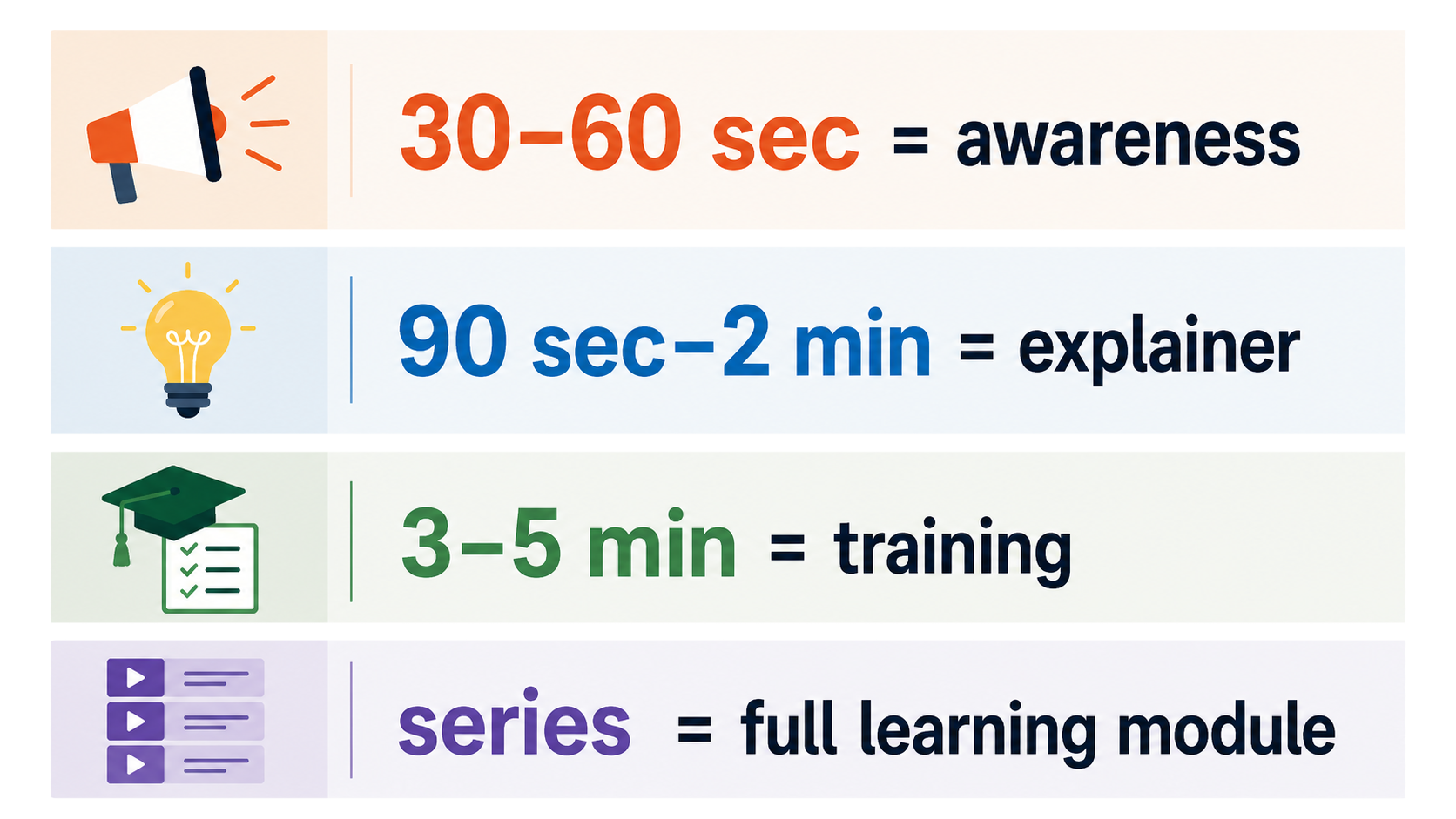
A 30 to 60 second video is best for awareness. These work well on social media, digital screens, campaign pages, or email launches. They should focus on one message and one clear call to action.
A 90 second to 2 minute video is best for a simple explainer. This is a strong length for introducing a service, explaining a process, launching an initiative, or giving a high-level overview.
A 3 to 5 minute video can work for training or educational content when the topic needs more context. This is often better for LMS modules, staff training, student education, or deeper walkthroughs.
A longer topic should usually become a series. If a video tries to explain everything at once, people may finish it without remembering what they were supposed to do.
A useful rule is this: one video should have one main purpose.
If the project has three purposes, it may need three shorter videos.
What makes a university animation effective?
A strong university explainer does not start with animation. It starts with clarity.
Before design or motion begins, the team should know:
who the video is for
what the viewer already knows
what the viewer may be confused about
what tone the topic needs
what action the viewer should take after watching
what must be included for legal, policy, brand, or accessibility reasons
who needs to approve the script and storyboard
Once that is clear, the animation can do its job.
The best university videos usually have a few things in common.
They are written in plain language
University topics can become very wordy very quickly. A video script should not sound like a policy document being read out loud.
Good video writing uses short sentences, clear examples, and everyday language. That does not mean dumbing the topic down. It means respecting the viewer’s time.
If a student is trying to understand a support service, they should not have to decode internal terminology. If a staff member is completing training, they should know exactly what the key point is.
They use visuals to explain, not decorate
Animation should not just make the video look nice. The visuals should help the audience understand.
For example, a process can become a simple step-by-step journey. A complex framework can become a visual map. A sensitive situation can be shown through gentle character moments. A research concept can become a metaphor that makes the idea easier to remember.
The strongest visuals are not always the busiest visuals. Often, the clearer choice is better.
They are designed for accessibility early
Accessibility should not be something added at the very end.
For university videos, it is smart to plan for captions, transcripts, readable on-screen text, clear contrast, simple visual hierarchy, and audio description considerations from the beginning. This is especially important for public-facing videos, LMS content, orientation materials, and training that may be used across different departments.
Planning early also avoids expensive fixes later. If a video is designed with too much tiny text, fast motion, or visuals that only make sense if you can see everything perfectly, accessibility becomes harder to solve after the fact.
They account for stakeholder approvals
University projects often involve several reviewers. A department lead may care about the message. A communications team may care about brand. A legal or policy reviewer may care about wording. A subject matter expert may care about accuracy. Accessibility staff may care about compliance and usability.
That is normal, but it needs to be managed.
The best way to avoid messy revisions is to approve the message in stages:
Creative brief
Script
Visual direction
Storyboard
Animatic or rough timing
Final animation
Captions, transcript, and delivery files
If a team waits until final animation to debate the script, the project becomes more expensive and stressful. A storyboard approval stage gives everyone a chance to respond before the heavy production work begins.
What should universities prepare before contacting an animation studio?
You do not need a finished script before reaching out. In many cases, it is better to start with the problem you need to solve.
Helpful materials include:
a rough project goal
the audience you need to reach
any existing policy, framework, slide deck, or training material
examples of videos or styles you like
brand guidelines, colours, fonts, or logo files
required accessibility standards
the desired length or number of modules
launch date or approval deadline
where the video will be used
who needs to review the work
Even if the material is messy, a good studio can help shape it into a clear creative direction.
What affects the cost of a university animation?
The cost of an animated training or explainer video depends on more than length.
A one-minute video with multiple characters, detailed backgrounds, several stakeholders, and many revisions may cost more than a simpler two-minute video. The scope matters.
The biggest cost factors usually include:
script development
number of scenes
number of characters
amount of custom illustration
background design
complexity of motion
voiceover
music and sound design
captions and transcript support
number of review rounds
alternate formats for social, web, or campus screens
whether the project is one video or a full module series
For universities, the approval process can also affect cost. More stakeholders usually means more coordination, more revision management, and more time built into the schedule.
The cleanest way to manage budget is to define the must-haves early. For example, if the video needs to fit a fixed budget, the studio can simplify the visual style, limit the number of characters, reuse assets across modules, or create a modular package that keeps the series consistent.
Animation vs. live action for university communication
Live action can be a great choice when the goal is to show a real place, real people, campus life, interviews, or event energy.
Animation is often stronger when the goal is to explain something abstract, sensitive, procedural, or difficult to film.
For example, live action may be better for a recruitment video that shows campus atmosphere. Animation may be better for explaining how a student support process works, introducing a policy, or simplifying a framework.
There is also a practical advantage: animation can be updated more easily than live-action footage. If a form changes, a step changes, or a department name changes, an animated scene may be easier to revise than reshooting people and locations.
Animation also avoids some of the issues that can come with filming students or staff, including scheduling, location access, privacy, consent, and the possibility that the video feels outdated when people or spaces change.
Where university teams can use animated videos
A finished university animation can often be used in more than one place.
Depending on the project, it can be delivered for:
university websites
student service pages
learning management systems
staff training platforms
orientation modules
email campaigns
campus digital screens
social media posts
conference presentations
grant reporting
community partner outreach
internal onboarding
This is why it helps to plan delivery formats early. A horizontal video may work well for a website or presentation, but a vertical cutdown may be better for Instagram Reels, TikTok, YouTube Shorts, or mobile-first student communications.
A good production plan can include the main video plus shorter cutdowns, still frames, thumbnails, caption files, and alternate exports.
Common mistakes to avoid
The most common mistake is trying to say too much.
Many university teams have important information to share, and the instinct is to include every detail. But a video is not a storage container for every possible message. It is a guided experience.
Other common mistakes include:
starting animation before the script is approved
using internal language that students do not use
making the tone too formal for the audience
forgetting captions, transcripts, and accessibility until the end
designing visuals that are too busy for the message
not deciding who has final approval
creating one long video when a short series would work better
not planning social or web cutdowns in advance
Most of these problems can be avoided with a clear brief and a structured production process.
How Woolley Studios approaches university animation
At Woolley Studios, we help universities, nonprofits, clinics, and public-facing teams turn complex information into clear animated videos.
Our work is especially focused on training, awareness, and explainer content: videos that need to be understandable, human, and useful. That can include student support videos, orientation explainers, educational modules, initiative launches, and sensitive-topic awareness campaigns.
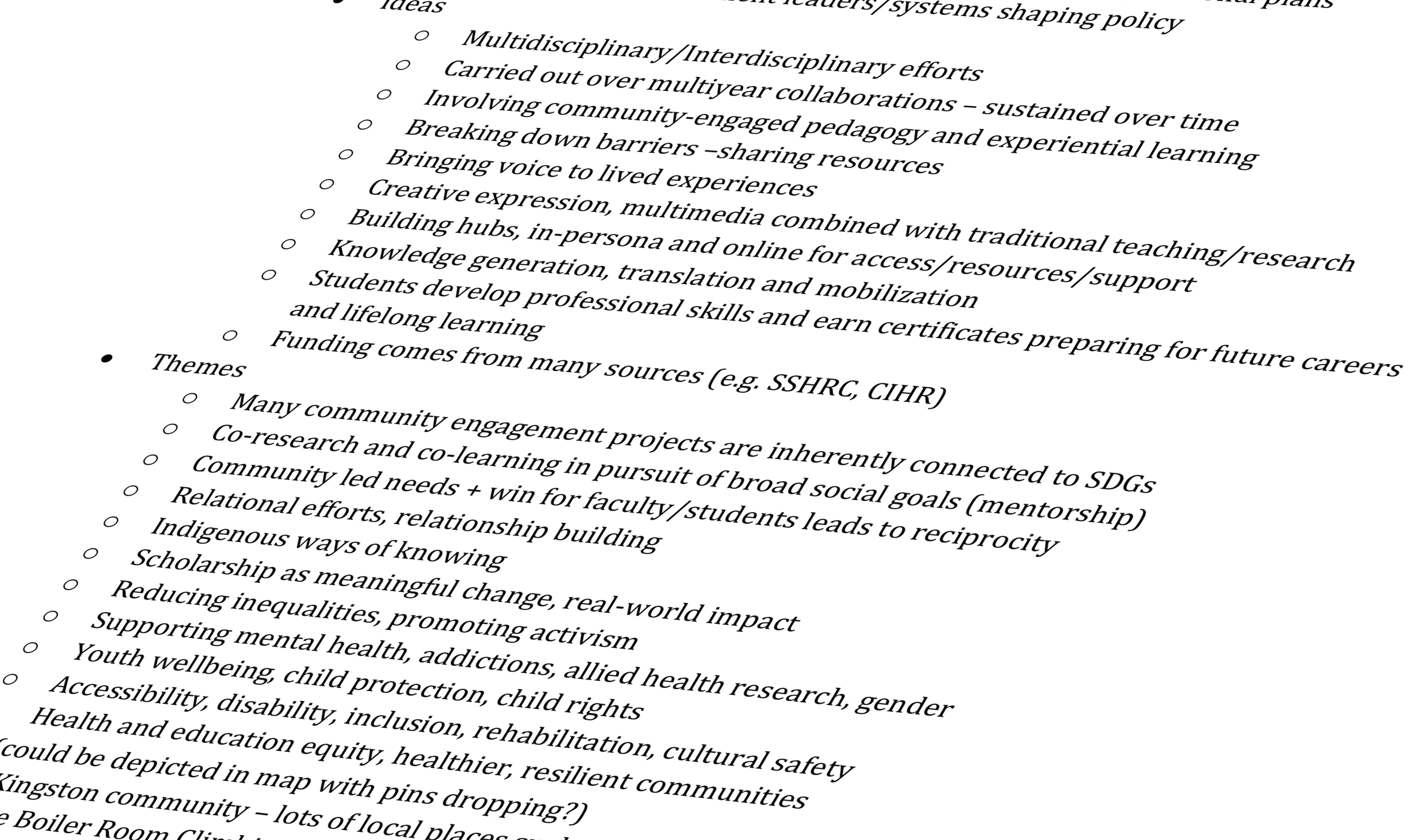
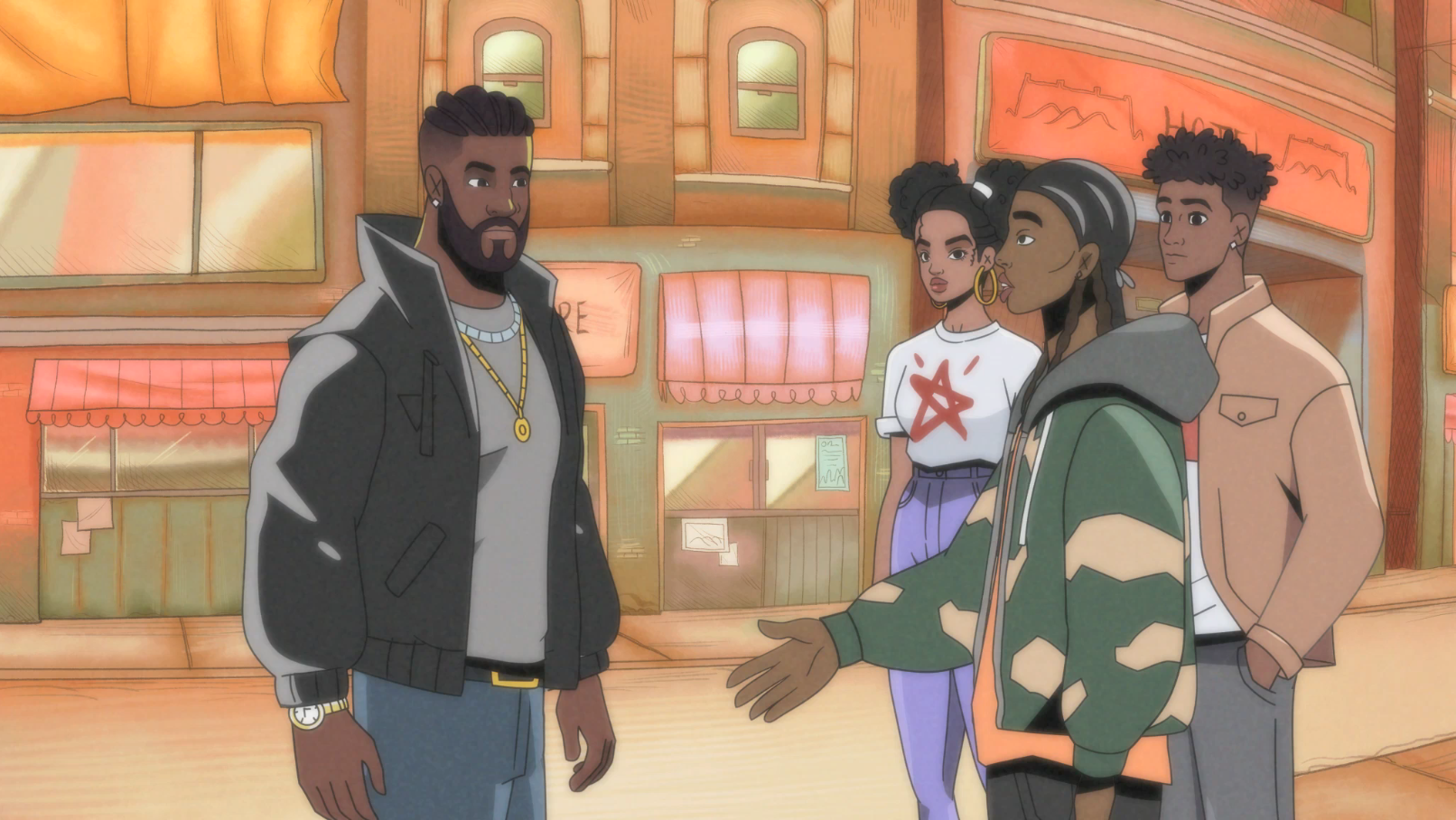
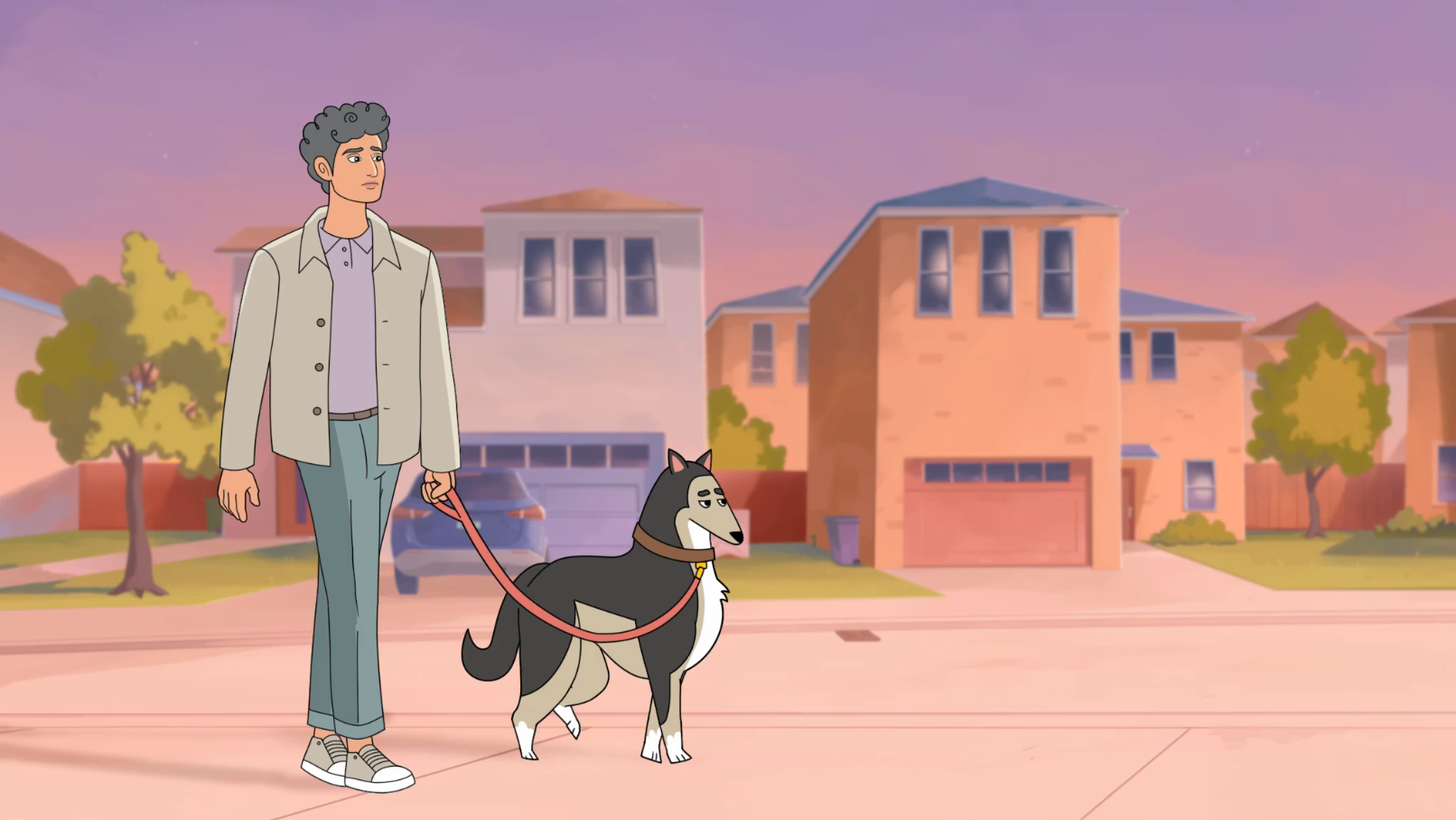
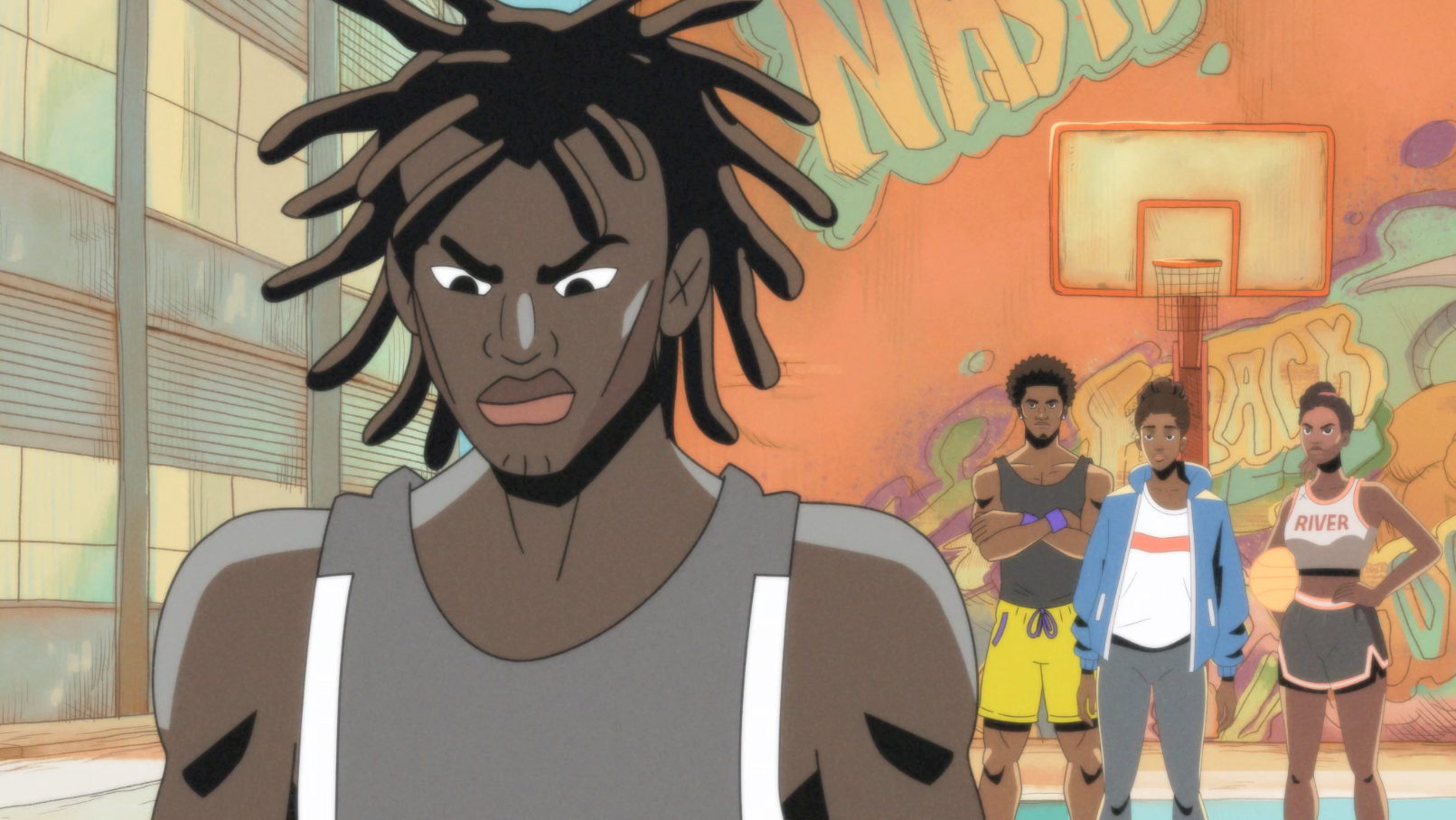
For example, our work with Queen’s University helped bring a community engagement framework to life through an inclusive 2D explainer. We have also created educational module-style animation for the Child Development Institute, using approachable character design and clear storytelling to support learning and awareness.
Our process is built around clarity:
we turn your framework, policy, or idea into a creative brief
we shape the script around the viewer’s needs
we use storyboards so stakeholders can review the direction early
we design visuals that support understanding
we deliver files for web, social, campus screens, and caption-ready use
The goal is not just to make something look good. The goal is to make the message land.


When should a university team start planning?
Earlier than you think.
If your video needs approvals from multiple people, build in time for feedback. If it needs to launch with an initiative, event, training module, or academic term, start before the deadline feels urgent.
A simple explainer may move quickly when the message is clear. A full training series with multiple reviewers may need more time for script development, storyboards, accessibility planning, and final delivery.
The earlier the team aligns on audience, tone, scope, and approval process, the smoother the production will be.
Final thoughts
Universities do not need more content for the sake of content. They need communication that people can understand, remember, and act on.
Animation can help when the topic is complex, sensitive, abstract, or hard to film. It can make support services feel less intimidating, training modules easier to follow, and campus-wide initiatives easier to explain.
The best university animations are not just creative. They are clear, accessible, and built around the viewer.
If your team has a student support, training, wellness, EDI, research, or awareness project that needs to be explained clearly, Woolley Studios can help turn it into an animation plan.
Have a project in mind? Send us your script, framework, policy, slide deck, or rough idea, and we’ll help you figure out the clearest way to bring it to life.
